
A short history
Brothers Frank L. and John W. Fenton started the Fenton Art Glass Company in 1905 in Martins Ferry, Ohio, decorating glass made by other companies. They soon built their own factory across the river in Williamstown, West Virginia, which was making glass by 1907. Carnival glass came out that same year, and hobnail in opalescent colors followed in 1940 and became one of their best sellers.
Fenton wound down its traditional glass production in 2011. Some pieces have been made from Fenton molds since then, but the classic Williamstown era is over, which is a big part of why collectors keep chasing vintage pieces.
Styles collectors love
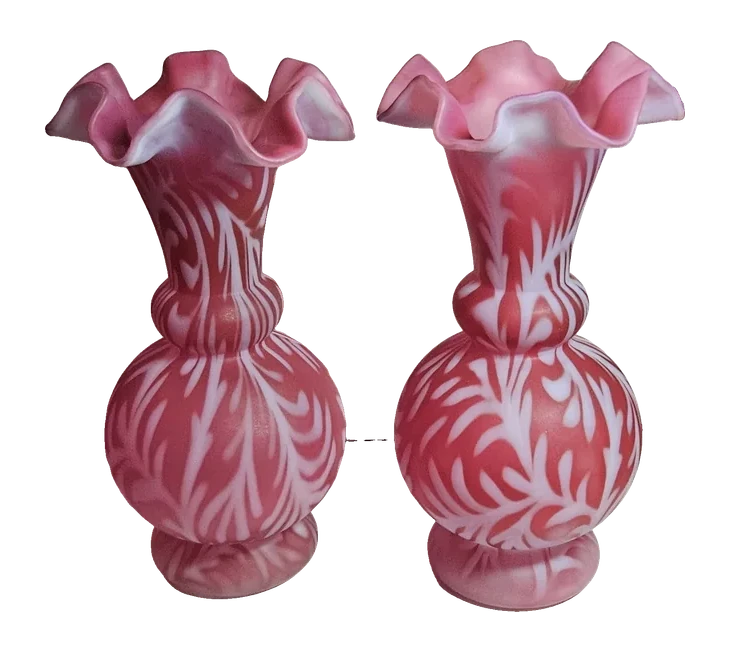
Hobnail (the raised bumps you recognize instantly), opalescent edges that glow milky white, iridescent carnival glass, crested pieces with a contrasting rim, milk glass, Burmese, and hand-painted pieces signed by the decorating artist. Fenton also made some uranium-bearing colors, like Topaz Opalescent, so we put anything yellow-green under the UV light.
Reading Fenton marks
Fenton started molding its script "Fenton" logo in an oval into pieces in 1970, beginning with carnival glass, and it was on much of the line by the mid-1970s. From the 1980s a small number under the logo is commonly read as the decade: 8 for the '80s, 9 for the '90s, 0 for the 2000s.
Older Fenton is often unmarked and originally wore a paper label that's long gone, so unmarked doesn't mean it isn't Fenton. Collectors have also reported fake oval marks on imported carnival glass, so a mark is a clue, not a guarantee.
Is Fenton glass valuable?
Prices run from a few dollars to serious money. Older and less common colors, signed hand-painted pieces, lamps and fairy lamps, and anything in great condition tend to do best. Common hobnail milk glass is plentiful, which makes it a fun, affordable place to start. We point out any flaws on camera so you know what you're bidding on.
Fenton Glass FAQ
Is all Fenton glass marked?
No. Fenton began molding its oval logo into pieces in 1970 and used it widely by the mid-1970s. Earlier pieces were often unmarked and relied on paper labels that have since fallen off.
How can I identify Fenton glass?
Check the base for the oval logo, then look at pattern, color and finish. Hobnail shape, opalescent edges and crimped or crested rims are classic Fenton features, and comparing against catalogs or reference books helps with unmarked pieces.
Is Fenton glass still made?
Fenton wound down its traditional glassmaking in 2011. Some items have been made from its molds since, but the pieces we sell are vintage, from the original company's run.
Does Fenton glass glow under a blacklight?
Some does. Fenton made uranium-bearing glass such as Topaz Opalescent, and those pieces glow green under UV. We test likely pieces on camera during our live shows.